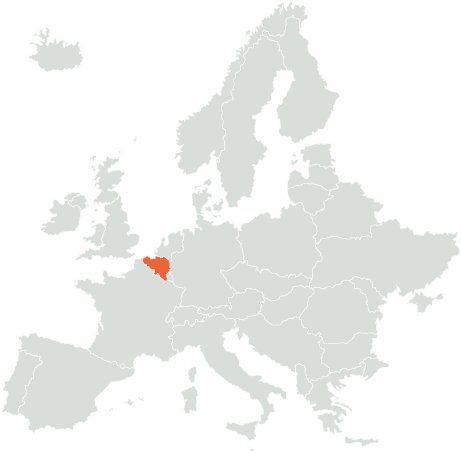
Tolls in Belgium | Travel across Europe non-stop with Vrio’s comprehensive end-to-end toll payment solutions

Belgium operates a kilometre-based toll system for goods vehicles with a maximum authorised mass exceeding 3.5 tonnes, as well as certain N1-category vehicles with body code BC.
To drive in Belgium, the vehicle must be fitted with a switched-on on-board unit, or OBU, linked to an authorised provider. The device records the kilometres travelled and calculates the corresponding charge on tolled roads in Flanders, Wallonia and the Brussels-Capital Region. The applicable rate depends on the region and type of road, the maximum authorised mass of the vehicle combination — including the trailer —, the vehicle’s Euro emissions standard and, in Flanders, its CO₂ emissions class. The cost may therefore vary along the same route depending on the regions crossed and the characteristics of the truck.
Flanders includes a component linked to the vehicle’s CO₂ emissions class in the toll calculation. The system comprises five CO₂ classes, with Class 5 applying to zero-emission vehicles. A better CO₂ class results in a more favourable toll rate. It is important to check that the vehicle’s CO₂ class has been correctly declared to the OBU provider.
Important: Low Emission Zones (LEZ)
In addition to the kilometre-based toll, some Belgian cities apply emissions-based access restrictions. In Antwerp and Ghent, foreign-registered vehicles that meet the access requirements must be registered in the Flemish LEZ database. Brussels operates a separate system. Having a toll OBU does not mean that the vehicle is automatically registered for access to a Low Emission Zone.
Official information on Ghent’s LEZ
Official Brussels LEZ registration
To complete the registration, access the following link and create an account on the platform: Official Antwerp LEZ check and registration